Is human composting safe?
Yes. Human composting providers are licensed funeral homes that are carefully regulated and designed to protect both public health and the environment.
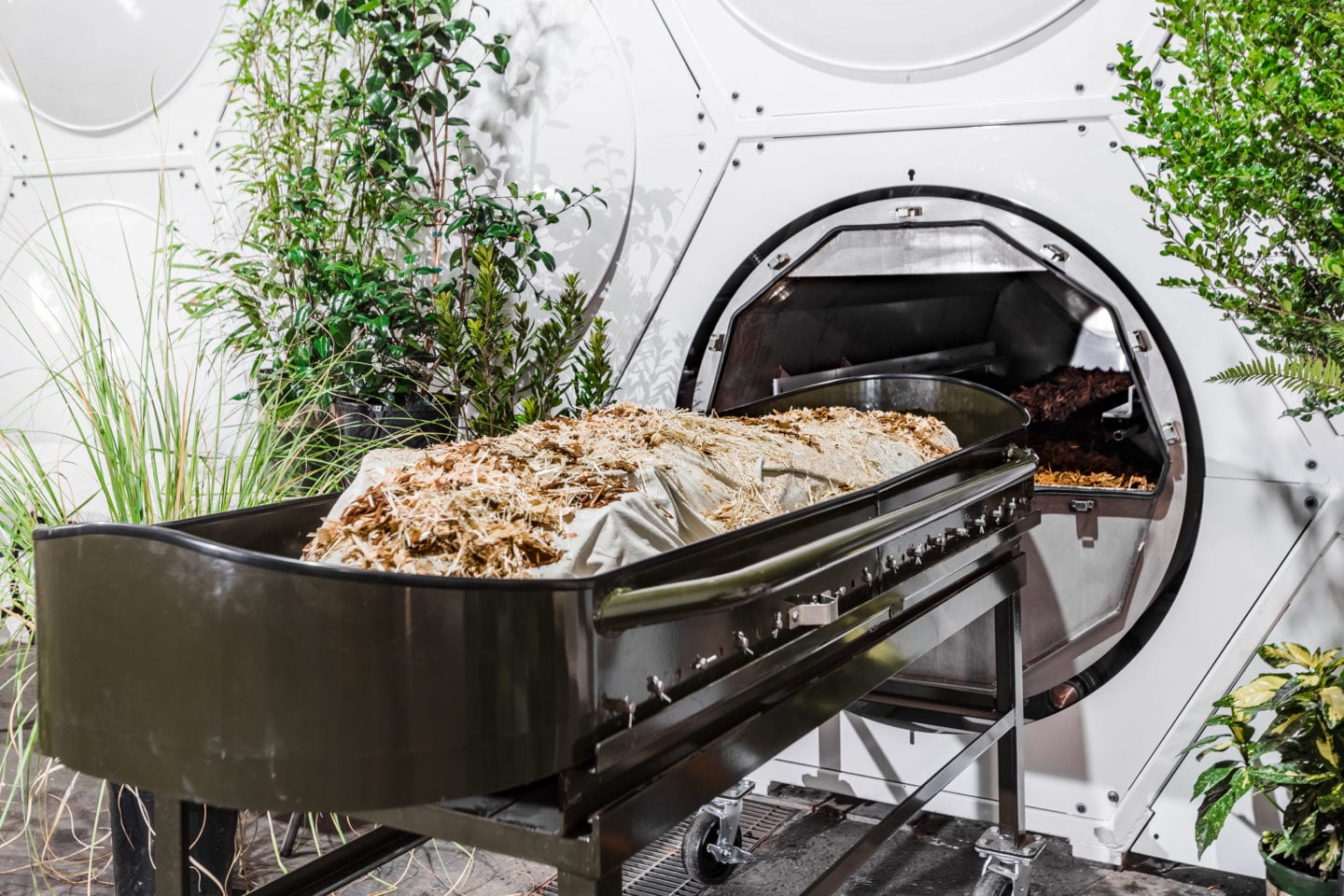
Throughout the process, temperature, oxygen, and moisture are carefully monitored to create ideal conditions for decomposition while also meeting state health standards The process creates heat of over 131F, which kills viruses, bacteria, and pathogens, and exceeds EPA requirements for heavy metals, which are stabilized. By the time the process is complete, the material has been transformed into stable, nutrient rich soil.
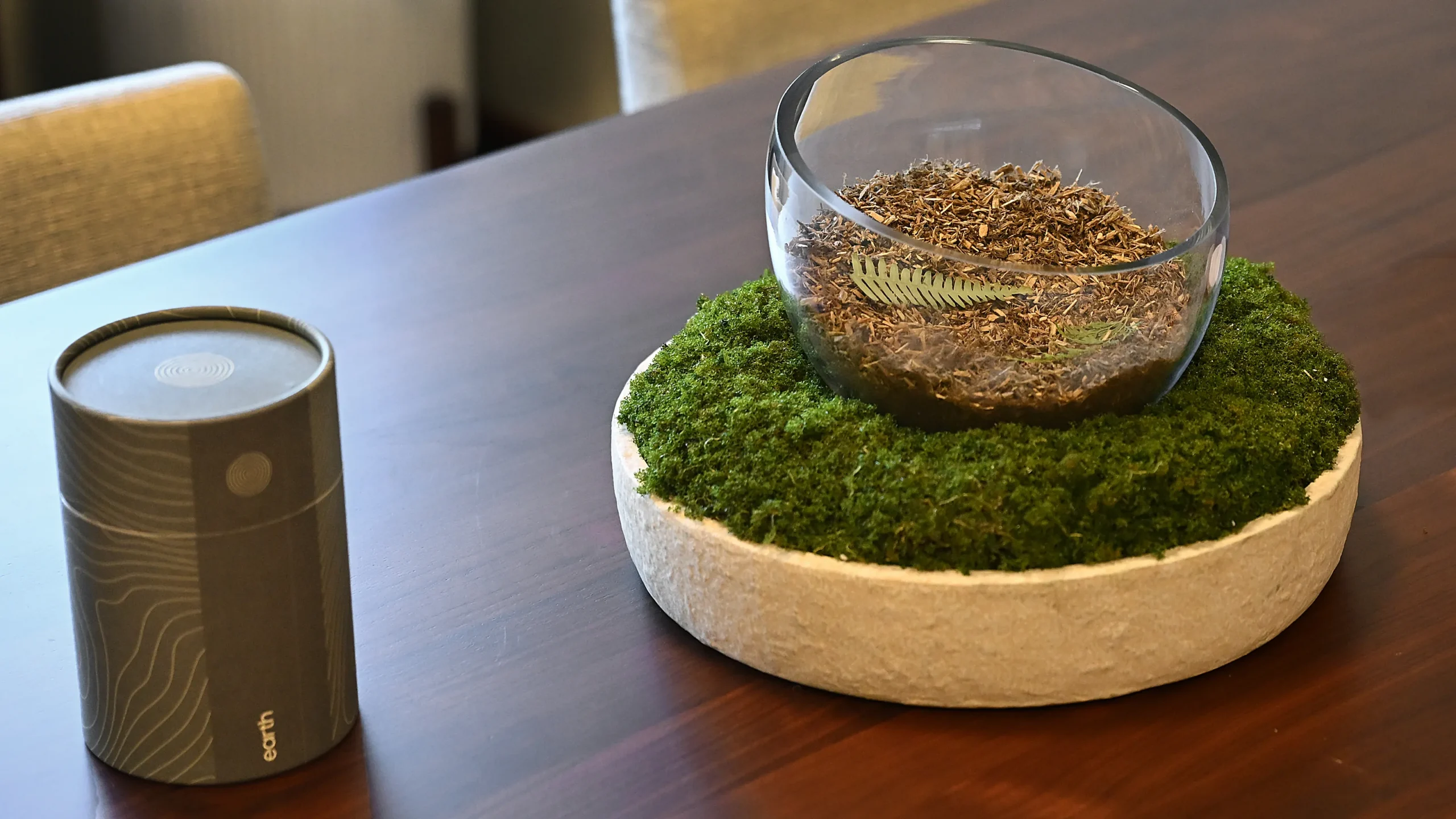
And no, it doesn’t smell like a decomposing body! Microorganisms present in the process break down odorous gases into water and CO2. In addition, biofilters and mechanical ventilation are used to aerate the process to ensure that there’s no smell. Providers often describe the finished soil as smelling much like healthy forest soil after a rainstorm—earthy, clean, and surprisingly familiar.
One family said, “When my son’s soil arrived we were all drawn to it. The earthy smell, the beautiful color, the sense of vibrancy and life.”
Can I still have a funeral or memorial service?
Absolutely! Choosing human composting doesn’t mean giving up the rituals, gatherings, and moments of connection that help us grieve.
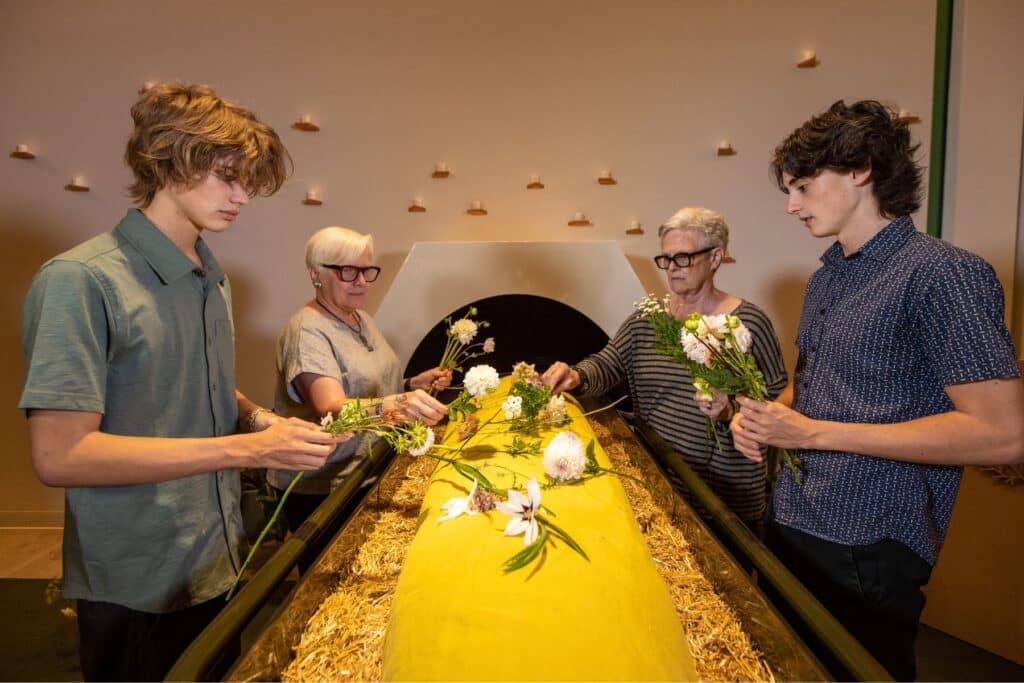
Families can still hold a funeral, memorial service, homegoing, celebration of life, or other ceremony before or after the Natural Organic Reduction process, depending on their preferences and their provider’s options. Just like with burial or cremation, the way we care for the body and the way we honor a person’s life are two separate decisions.
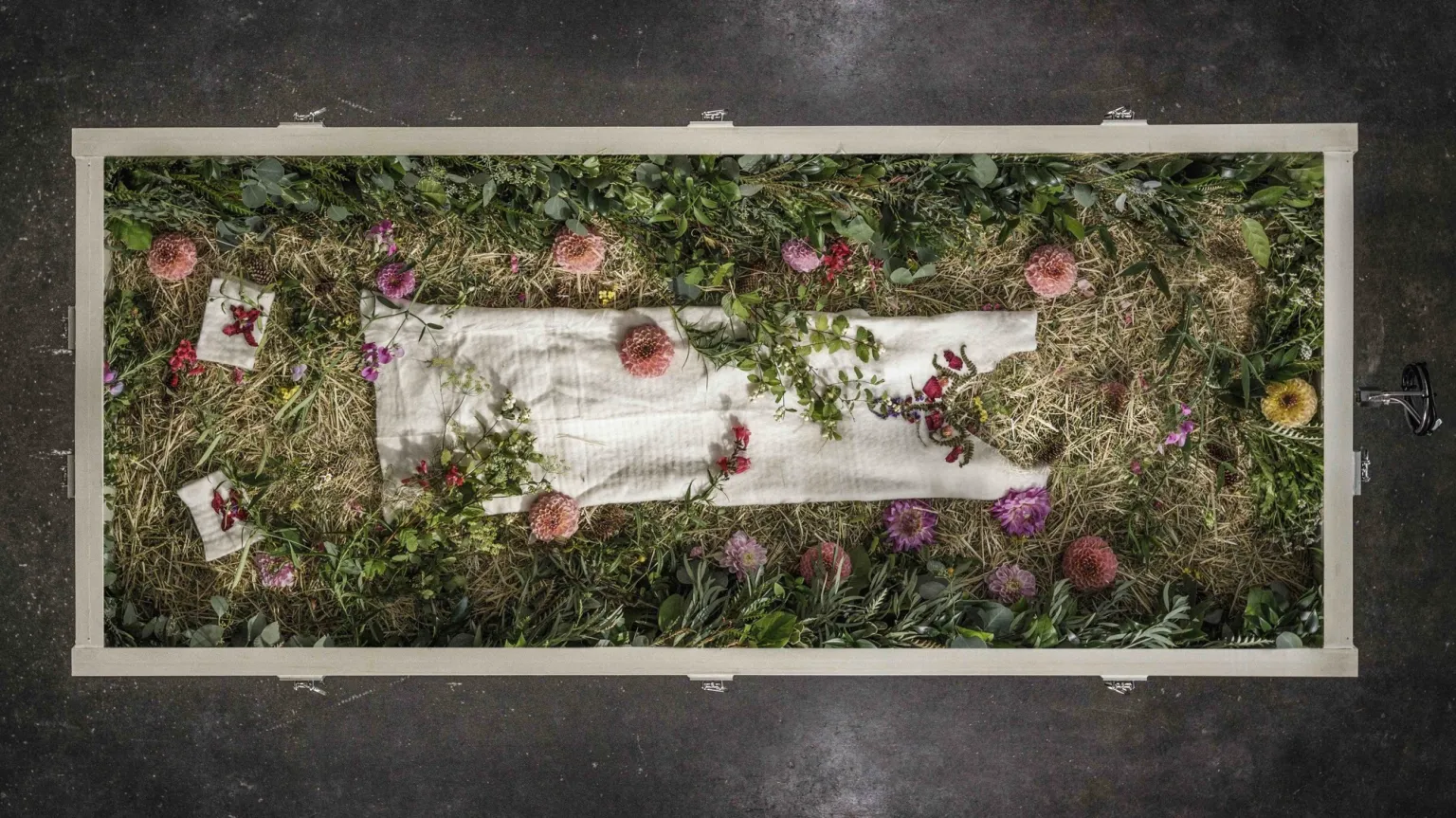
For people who have never seen what a human composting funeral can look like, it may be hard to imagine how ceremony and soil transformation can fit together. Families and funeral directors at NOR facilities have created beautiful, meaningful rituals in so many different ways. From gathering around the vessel, sharing stories and music, placing flowers or other meaningful plant materials into the vessel, spending private time with their person, or creating a special ceremony around the return of the finished soil.
Some providers have even designed dedicated spaces for these moments. At Recompose, for example, families can gather in a ceremony space designed specifically for human composting, or spend private time with their person in the Cedar room, a space inspired by home funeral traditions where families can say goodbye, hold a vigil, or participate in hands-on care before the transformation begins.
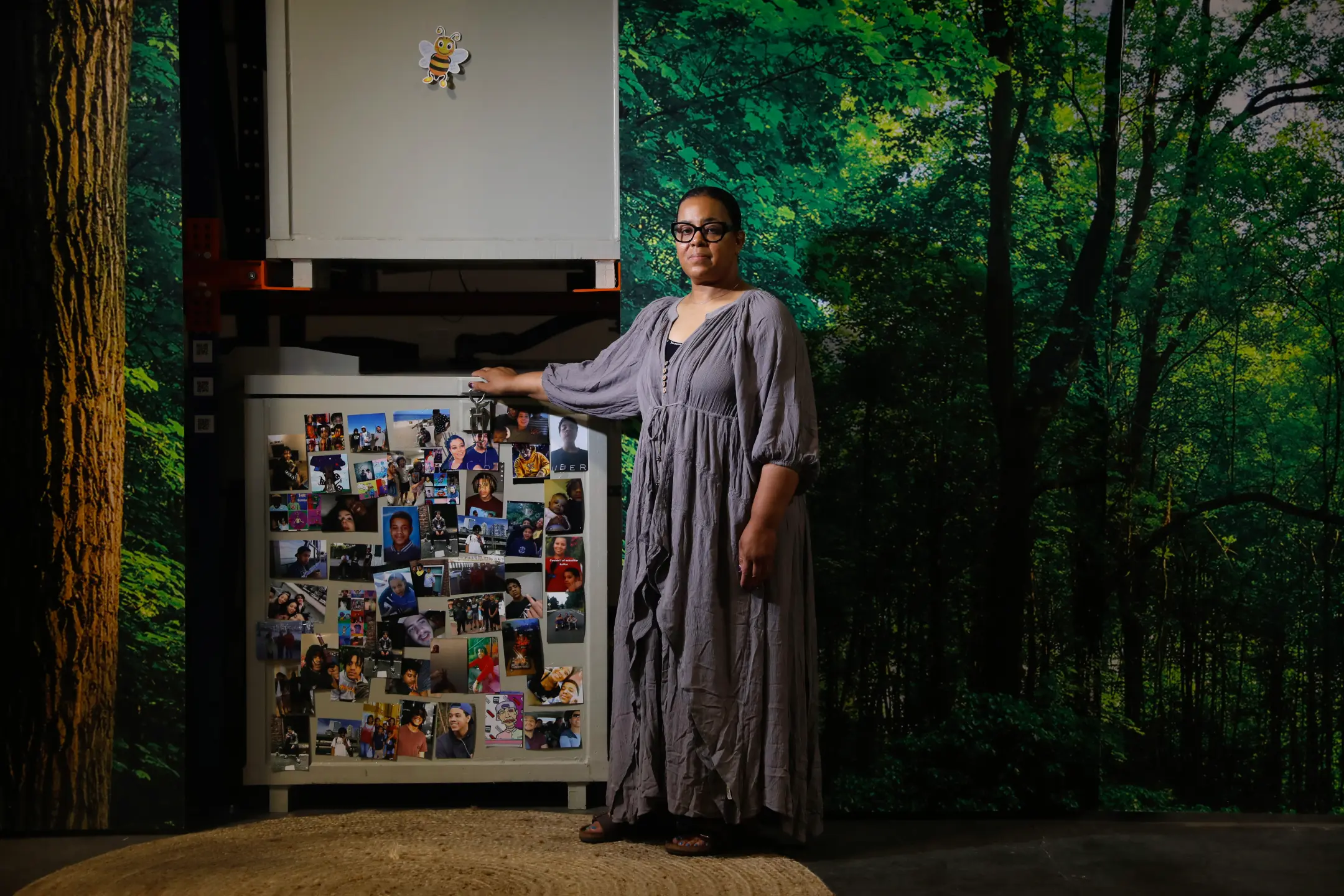
Other providers have created their own approaches to ritual. At Return Home, families often personalize their person’s vessel with photographs, artwork, and meaningful objects. They’re also encouraged to visit and spend time with the vessel throughout the transformation process.
Recommended media:
“Washington Teen Gets Body Composted After Sudden Death.”
“Remains of First Colorado Person to Undergo Body Composting Laid Out.”
What happens to the bones?
Like every form of body disposition, bones take a bit longer to break down than soft tissue.
After the composting process is complete, any remaining bone fragments are dried and gently processed into smaller pieces before being incorporated back into the finished soil. This allows the body’s minerals to become part of the final soil, just as they would through natural decomposition in the ground.
Wait, are there…bugs?
Nope! No bugs.
The process relies on naturally occurring microbes (tiny organisms that are already present in our bodies and the environment), along with oxygen, moisture, and plant materials to break down the body.
In other words, it’s microbes, not insects doing the work here, since the process happens in a contained, carefully managed environment. That means no flies, beetles, worms, or other critters we often associate with decomposition in the wild.
Think of it this way–the microbes got the invitation to the decomposition party, the bugs did not. (Sorry, bugs).
What happens to medical implants like pacemakers or artificial joints?
Many medical implants can remain with the body during the composting process, but some are removed beforehand.
Pacemakers and other battery powered medical devices must be removed before Natural Organic Reduction, just as they are before flame cremation, since they can pose a safety risk if left in the body. Metal implants like artificial hips, knees, surgical rods, or dental work don’t break down during composting, so they’re separated from the finished soil at the end of the process.
Whenever possible, these metals are recycled through specialized medical metal recycling programs rather than sent to a landfill.
Are there any circumstances where someone isn’t a candidate for human composting?
In most cases, yes, a person can still choose human composting even if they had a serious illness or received treatments like chemotherapy.
People often worry that cancer, chemotherapy, radiation, or other medical conditions might prevent Natural Organic Reduction, but these are generally not barriers. The composting process is carefully managed and reaches temperatures that support pathogen reduction, while medications and other compounds continue to break down as decomposition progresses.
That being said, every provider has their own policies and there are a few situations that may require additional evaluation or make Natural Organic Reduction unavailable. These can include certain highly infectious diseases, specific public health concerns, or legal circumstances surrounding a death.
If you have questions about a particular medical condition or treatment, our advice is to speak directly with the human composting provider. They’ll be able to explain any requirements or limitations that may apply in your state.
What can I do with the soil?
That depends on where you live.
Families usually receive about one cubic yard of soil, though some choose to donate a portion or all of it to conservation or restoration projects.
Depending on state law, the soil can be used to nourish gardens, trees, grow native plants, or other landscapes. Some states place common sense restrictions on how it can be used, for example, prohibiting its use on food crops or requiring it to remain on private property, so it’s always worth asking a provider.
Many families use a small portion of the soil to plant a memorial tree or create a meaningful place of remembrance. Karen Y, in Seattle, said, “We had no idea the profound significance receiving the soil of our son for our personal use would have. We used it to plant a dogwood tree in our yard that can be seen from his childhood bedroom. Our yard has become a spiritual place where we go to talk to our son while he, in turn, nourishes his dogwood tree. Thank you for this beautiful gift.”
Recommended reading: “‘My Brother Didn’t Want a Burial. He Chose to Put His Body to Good Use.”’
I’ve heard it called “terramation.” Is that the same thing?
Mostly, yes.
Natural Organic Reduction (NOR) is the legal and scientific name for the process. Human composting is the plain language term most people use to describe it.
Terramation is a trademarked brand name created by Return Home, one of the companies that offers human composting services. Much like people sometimes say “Kleenex” when they mean facial tissue, or “Jaccuzzi” for a hot tub, (terms we’ve adopted as generic terms for products) some people use “terramation” to refer to human composting generally, but it isn’t the name of the process itself.
What is the difference between green burial and human composting?
Green burial and human composting share many of the same values like caring for the dead in a way that minimizes environmental impact, avoiding unnecessary chemicals and materials, and recognizing that our bodies are a part of the natural world.
The biggest difference is where and how the transformation happens.
With green burial, the body gets returned directly to the earth. The body is placed in a biodegradable container or shroud and buried in a natural setting where decomposition takes place over time. With Natural Organic Reduction, the body is transformed into soil in a carefully managed facility before that soil is returned to the family or used in conservation projects.
Human composting was originally imagined as a way to bring the principles of green burial into places where this option is hard to access. When Katrina Spade first began developing the idea, she called it the Urban Death Project because she was thinking specifically about cities and places where land is limited, cemeteries are running out of space, or where natural burial grounds may not exist or be difficult for urban residents to get to.
For many people, green burial remains a wonderful and meaningful option! But in some areas, especially densely populated cities, green burial spaces may be limited, unavailable, or more expensive than families can afford. Human composting simply offers another way to make an environmentally conscious choice without needing a cemetery plot.
There are also some unique things that human composting allows. Unlike green burial, where the body remains in a specific location, the finished soil from Natural Organic Reduction can often be returned to family members. This can be meaningful for people who live far from loved ones, expect to move for work or school, or simply want their person’s remains to be close by.
The soil can also be a way to facilitate an ongoing relationship. Instead of visiting a grave site families might water a tree, tend a garden, pull weeds, plant flowers, or watch something new grow from the soil their person helped provide.
Ultimately, both green burial and human composting offer us ways to rethink our relationship with death and the earth. The right choice depends on what feels meaningful, accessible, and aligned with your values.
Is Human Composting Legal? How Do I Find a Provider?
In many places, yes! Human composting is legal in a growing number of U.S. states (14 as of this writing), though laws continue to evolve as more legislatures authorize Natural Organic Reduction.
One of The Order of the Good Death’s long-term goals is to make human composting legal in all 50 states.
We believe everyone deserves access to deathcare options that reflect their beliefs and values. Whether your priorities are environmental sustainability, returning your body to the earth, or simply having more choices at the en- of-life, your ZIP code shouldn’t determine what’s possible. But that work doesn’t happen on its own.
The Order has been proud to be at the forefront of many of the efforts to legalize Natural Organic Reduction across the country. Our legislative advocacy work includes helping draft and advise on bills, providing testimony before state legislatures, regularly strategizing with teams that include lobbyists, legislators, and government affairs professionals, connecting lawmakers with funeral directors, environmental scientists, and families who want this option, and organizing grassroots campaigns that build and sustain public support. We also work to expand public education and awareness, because passing a bill is only half the battle if people don’t understand what human composting actually is.
So, If human composting isn’t yet legal where you live, you can help change that!
SPEAK UP
Legislators pay attention when they hear from the people they represent. Whether you write a letter, send an email, make a phone call, or testify at a hearing, your voice helps demonstrate that people want more environmentally responsible end-of-life options. Stories like yours remind lawmakers that these bills are about real people and real families.
LEARN HOW THE PROCESS WORKS
Before a bill becomes law, it has to move through committees (SO. MANY. COMMITTEES.), hearings, votes, and the governor’s desk. Our guide, How a Human Composting Bill Becomes a Law, walks you through each step of the legislative process and highlights where advocates like you can have the greatest impact.
SHARE YOUR STORY
Maybe you’ve wished human composting had been available for someone you love. Maybe you simply want this option for yourself. Maybe you want to become a tree when you die. Share your enthusiasm for composting by spreading the word, sharing facts and information. Talk to your friends, family, and community, share your thoughts on social media. We have a whole guide to help you!
JOIN THE MOVEMENT
When legislation is introduced timing matters. Our Legislative Advocacy Hubincludes current calls to action, a state-by-state legislative tracker, sample letters and emails, a social media advocacy toolkit, and everything you need to help move a bill forward in your state.
Human composting didn’t become legal because people waited for change, it became legal because people created it. Every state that has legalized Natural Organic Reduction got there because families, funeral professionals, scientists, death positive advocates, and everyday people spoke up.
If your state isn’t on that list yet, let’s change that together!