
You know about green burial, aquamation, and human composting, but what else is out there?
Navigating Deathcare Options
On This Page
One of the most common questions we get is “Can I have a Viking funeral?,” closely followed by, “Can I keep my uncle’s skull?” or “What’s a sky burial?” The answer, as it so often is in deathcare, is “It’s complicated.”
For most of modern American history your choices after death were pretty straightforward, (burial or cremation), but today, people are exploring all kinds of alternatives. Some have been practiced for thousands of years, others are new innovations, and a handful exist only in viral videos, or overly ambitious marketing campaigns.
This guide explores the many ways humans have cared for their dead—from burial at sea and sky burials to memorial diamonds, space burials, and other emerging ideas. Some of these options are legally available today, while others are only possible in certain places or cultures. Many are theoretical, and some, despite how often they’re requested, simply aren’t realistic (sorry, Viking funeral fans). We’ll separate established practices from speculative concepts, unpack bold environmental claims, and help you distinguish meaningful innovation from wishful thinking.
When it comes to planning for death, curiosity is wonderful, but good info grounded in facts, science and history is even better.
Established Practices
Before we start talking about space burials and futuristic death pods, let’s remember that humans have been figuring out what to do with dead bodies for a very long time. Some of the options people are rediscovering today, like green burial, aren’t new at all, they’re ancient practices that fell out of, (or were regulated) out of practice, while others are traditions that never really left.
Can I be buried at sea?
Sea burials have been practiced about as long as people have been sailing. Today, this form of burial is most often associated with naval branches of the military, but in the U.S. civilians have this option, too. A burial at sea can often be more affordable than a standard burial, and if you forego the embalming and casket, it’s among the most environmentally friendly choices available.
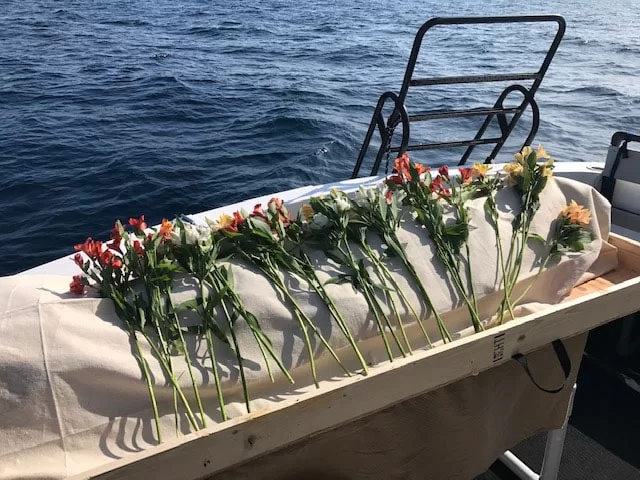
Via burialatsea.com
In some places it’s possible and legal to have your whole body “buried” in federally approved waters.
How does a sea burial work? Typically, a few family and friends, along with their person’s body, will be taken several miles out to sea by boat. These boats will be equipped with a special “slide” that will help move the body into the water. Bodies are either placed in a weighted casket, or there’s the eco-friendly option of being shrouded in natural fabric with stones, which allow the body to sink to the ocean floor.
How can I donate my body to science?
Start with this primer on Scientific Body Donation.
Donating your body to science can be an extraordinary final gift! Medical students need bodies to learn anatomy, researchers need human tissue to better understand disease and develop new treatments, and some people simply like the idea that their body might be helpful to others after they’re gone.
However, a gift this intimate deserves more than just a signature on a form. Before you donate your body, you should understand what you are actually consenting to and who you are trusting to carry out that promise.
Unlike organ donation, which is regulated through a national system in the U.S., whole body donation doesn’t have the same federal oversight. This can create confusion about who is allowed to accept bodies, how they can be used, what happens to remains afterward, and what protections donors and families have. There have also been cases of commercial “body brokers” exploiting families and selling human remains without meaningful consent.
The lesson here is isn’t that body donation is inherently unsafe, or that you shouldn’t make this generous gift. It’s that trust should not mean “trust blindly.” A reputable donation program should be able to tell you, clearly and in writing, what happens to your body from the moment it is accepted until the final disposition of your remains.
Questions to Ask
- Who exactly am I donating to? Is it a medical school, university, nonprofit, research institution, or private company?
- What uses am I consenting to? Does the agreement describe specific types of education or research, or does it give the organization broad discretion?
- Who will have access to my body? Can it be transferred to another institution or organization?
- Can my body or body parts be transferred or sold? If so, under what circumstances and with whose consent?
- Will my body be used for research, medical training, commercial education, or all of the above?
- What happens to my remains afterward? Ask specifically about cremation, aquamation, burial, return of cremated remains, and the timeline.
- How does the organization track and safeguard remains?
- What happens if the organization closes or can no longer accept donations?
- Can my family receive information about how my body was used?
- What happens if my donation is rejected at the time of death?
That last question is important. Even if you have registered with a medical school or private donation program, <b>acceptance is not guaranteed.</b> Bodies may be rejected because of any number of reasons. Too old! Too young! Cause of death, body size, autopsy, illnesses, or other circumstances. Some programs have surprisingly specific restrictions. So do NOT make body donation your only end-of-life plan, and be sure your chosen family knows your backup disposition plan, too.
You should also remember that consent is not a blank check. If you agree to donate your body for medical education, you deserve to know what exactly that means. If you want your body used for a specific kind of research, or not used in certain ways, find out whether the program allows for those boundaries.
What is a “body farm”?
Perhaps you’d like to decompose in nature. In that case, donating to a forensic anthropology research facility, aka a “body farm,” might be an option. These facilities use donated human remains to study decomposition, which can help researchers and law enforcement better understand what happens to human bodies after death.
This is a very different kind of donation from donating to a medical school, so read the program’s consent materials carefully and understand exactly what you are agreeing to. Start with Open Eye Wakes & Body Farms to learn more.
For more practical info, see How Can You Donate Your Body in the U.S. and What Happens When You Donate Your Body to Science?
Cultural & Historical Traditions
Humans around the world have created countless ways to care for their dead, shaped by geography, religion, environment, and ideas about what happens after life ends. Some traditions are deeply spiritual cultural practices, while others have become more myth than reality.
Can I have a Viking funeral?
When most people say they want a Viking funeral, they’re picturing a scene straight out of the movies, their body laid upon a majestic wooden boat, drifting into the sunset as a single flaming arrow is shot from shore. The arrow hits its mark (on the first try, of course), the boat erupts into glorious flames, and everyone watches as it disappears over the horizon in a blaze of cinematic glory. It’s undeniably a cool image. Truly. I mean look at this.
It’s also not how any of this works.
While Hollywood has gifted us plenty of memorable Viking funeral scenes, the iconic “flaming arrow to a drifting boat” owes far more to modern storytelling than historical evidence.
First, you’re almost certainly not going to find a government agency willing to issue a permit to set a human body adrift on a burning boat. Between fire hazards, navigational safety, environmental regulations, wildlife health and safety, and the not so small matter of launching a burning corpse into a public waterway, the answer is going to be a firm “ABSOLUTELY NOT.”
Even if someone did let you try, physics will not.
Modern crematories operate at roughly 1,400–1,800°F (760–980°C) for several hours. That’s enough heat to fully cremate a body. A floating wooden boat, exposed to wind and surrounded by water actively pulling that heat away from the fire just isn’t capable of creating the necessary conditions. Instead, you’d likely end up with a partially burned boat, a badly charred body, and abuse of a corpse charges–not exactly the majestic farewell you had in mind, is it?
And let’s spare a thought for your designated archer. While movies make arrows look like laser guided missiles, in reality they’re difficult to shoot accurately, especially at a moving target that happens to be floating on water. That means unless you’re Katniss Everdeen there’s a decent chance your sendoff would involve several missed shots, followed by awkward silence.
If the boat eventually drifted ashore with human remains still aboard, which is a very real possibility, it’s no longer a funeral, it’s a law enforcement investigation! Depending on where it occurred, intentionally setting fire to or abandoning human remains will likely result in criminal charges for abuse or improper disposition of a corpse.
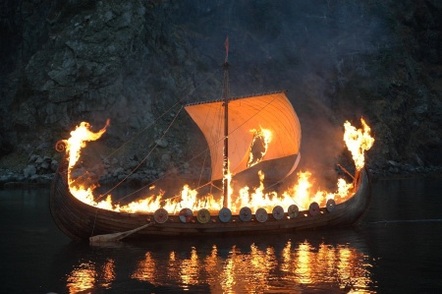
So, while a Viking funeral has become one of pop culture’s most enduring goals for our future corpses, it’s not a legal or practical option.
The good news? If what appeals to you is a farewell surrounded by water, fire, nature, and community, there are ways to capture that spirit practically and legally. A burial at sea, a waterfront funeral ceremony, a nordic inspired feast, or handcrafted boat imagery can evoke the same main character energy without accidentally becoming the evening news.
Recommended media:
In “How to Send a Viking to Valhalla,” our friend Susie shares how she created the perfect modern day send off for her history-loving mother, whose final wish was “to lay her remains on a ship set ablaze and sailed out to sea, her spirit released to the sky by cleansing fire and carried to the mighty halls of Valhalla by the sea winds.”
In this “Is it Legal?; Viking Funerals,” video two funeral directors reiterate why this isn’t a practical or legal option, and then set out to create an alternative that’s…mostly legal.
Can I have a sky burial?
Every so often, someone tells us they want a sky burial. Usually what they mean is, “I love the idea of my body returning to nature, and giving back to the animals and plants that nourished me in life!” Yes! We love this sentiment, too, but a sky burial isn’t simply another eco-friendly funeral option, it’s a sacred funerary practice rooted in religious beliefs and cultural traditions.
In a traditional Tibetan sky burial the deceased is brought to a designated site, like a mountain or elevated platform, where monks or specially trained practitioners called rogyapas typically cut and break down the body, before it’s left exposed to be consumed by vultures and other scavenging birds. The practice reflects Buddhist views on impermanence and non-attachment to the physical body, and is seen as an act of profound generosity that nourishes other living beings.
So why can’t you have one in the U.S.?
For starters, sky burials depend on a lot more than a mountaintop and birds. In addition to being deeply connected to religious and cultural practices, there are both practical and legal issues to contend with.
In the U.S. human remains are subject to state and local regulations governing burial, cremation, and other forms of disposition. Intentionally leaving a body exposed on public or private land would almost certainly violate environmental regulations, wildlife protections, and not to mention laws governing the disposition and treatment of human remains.
There’s another practical wrinkle: North America’s scavengers aren’t the same as Tibet’s. Sky burials rely on a species of vulture that’s evolved alongside the practice and can consume remains remarkably quickly. Here, you’d be far more likely to attract an assortment of coyotes, ravens, bears, insects, curious hikers, and eventually law enforcement. Besides, imagine explaining to the police how a human toe ended up in the parking lot of your local convenience store after a bird dropped it there. That’s not exactly “returning to nature,” that’s accidentally creating an episode for the next season of Unsolved Mysteries.
If what draws you to sky burial is the idea of returning your body to the natural world, there are several meaningful, and legal, ways to do that. Green burial, human composting, or sea burial can all help our corpses to become part of the ecosystem again. If your goal is contributing to others after death, you may want to consider body donation.
Sky burial is a reminder that there’s no “right” way to care for the dead. Around the world, funeral practices reflect the landscapes, religions, and values of the people who practice them, but appreciating those traditions doesn’t necessarily mean we can, or should, adopt them ourselves.
Can I keep a relative’s skull?
Believe it or not, this is one of the questions we’re asked more than almost any other. Usually, the person asking isn’t trying to be edgy, they’re looking for a more intimate, tangible connection to someone they love than an urn on the mantelpiece can provide, and they’re not the first people to feel that way.
Around the world, many cultures have maintained close relationships with the bones of their dead. In the Maya community of Pomuch, in Mexico’s Yucatán Peninsula, families exhume their loved ones about three years after burial, carefully clean the bones and place them in wooden boxes with beautifully embroidered cloths made by family members. Each year, relatives return to gently clean the bones again and leave offerings, a continuing act of love and remembrance, not something strange or macabre.
In Bolivia, another tradition centers on ñatitas (“little pug-nosed ones”), human skulls that are lovingly cared for as protectors of the household. Some belong to family members, while others are anonymous skulls that have become cherished companions over time. Each November they’re brought to the Fiesta de las Ñatitas, where thousands gather to celebrate the enduring bond between the living and the dead.
For many Native Hawaiians, iwi kūpuna (ancestral bones) are considered profoundly sacred. Traditionally, the careful burial and protection of these remains helped safeguard both the ancestors and the spiritual well being of the living. Today, the recovery, repatriation, and reburial of iwi kūpuna remains a deeply important cultural practice, reflecting an enduring responsibility to care for one’s ancestors long after death.
These traditions are all very different, but they share one important idea, that human bones aren’t just biological remains to be disposed of–they continue to have cultural, spiritual, and familial significance. Our modern American instinct to remove bones from daily life isn’t a universal human response. It’s just one cultural approach among many.
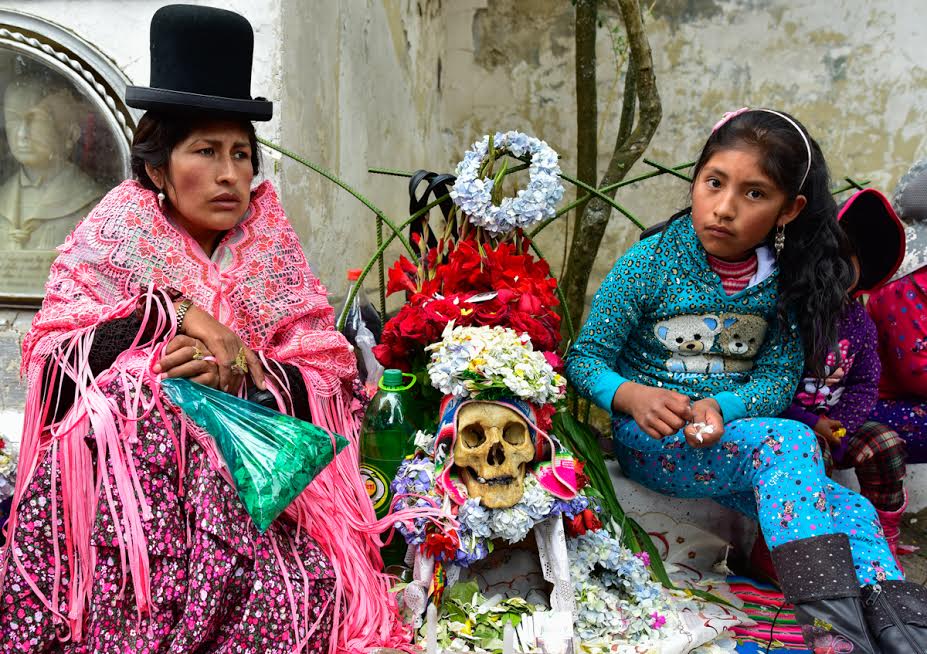
Photo by Paul Koudounaris
So, can you ask your funeral director to save Grandpa’s skull? Unfortunately, no.
The biggest obstacles are legal ones. In the U.S. funeral directors are required to account for a person’s remains through a legal form of disposition like burial, cremation, donation to science, or another method allowed by state law. There’s no checkbox that says, “Remove skull, clean it, return it to the family, then cremate everything else.” In fact, Founding Order Member and human remains legal expert Tanya Marsh has argued that reducing a loved one’s head to a skull for a family to keep isn’t legal anywhere in the U.S.
There are also practical problems, for instance funeral homes aren’t equipped to prepare skeletal remains in this way. Creating a clean skull suitable for long term preservation is a specialized process that often involves techniques used by museums, forensic labs, or osteological collections–not your local funeral home.
It’s worth remembering that throughout history, bones weren’t always hidden away, they were revisited, cleaned, displayed in ossuaries, buried beneath the family home, carried in processions, revered as sacred objects, or kept as tangible reminders of the people who came before us.
So while you (probably) can’t keep your uncle Manuel’s skull on the bookshelf with your manga collection, this question points to something deeply human–-our desire to remain connected to the people we love after they’re gone.
Recommended reading:
Memorial & Commemorative Options
From turning ashes into diamonds to sending a portion of ashes into space, these options focus less on disposition and more on creating a lasting, (or in some cases unique), connection after death.
What Can I Do With Cremated Remains?
You’re not limited to keeping the ashes in an urn on the mantel, (for the record, there’s nothing wrong with a classic urn!) Cremated remains, or ashes, can be scattered, buried, placed in a memorial garden, incorporated into a keepsake, or divided among family members. There’s also an growing number of companies offering to transform a ashes into something a little more…unexpected.
Want your loved one’s ashes turned into a diamond? A piece of glass art? A stone? A vinyl record? Apparently, there’s a post cremation service for just about every personality, hobby, or aesthetic. While some of these options are more affordable, others can cost thousands, or, in the case of larger memorial diamonds, tens of thousands of dollars.
Space Burial
If you want to spend eternity in the final frontier you might be considering a space burial, but what exactly does that involve? (Bagpipes, we hope).
The term “space burial” is a bit of a misnomer as no one is actually launching bodies into space, but rather small amounts of cremated remains are released into orbit, or stored in small capsules that are brought into space and then returned to earth.
There are several companies that offer space burial services and each one has a different method.
Here’s a look:
Aura Flights – This company sends small amounts of cremated remains into space via a hydrogen-filled stratospheric balloon, and then releases the ashes. You can watch their process in a video.
Celestis – This company has been in the business of offering “Memorial Spaceflights” for over twenty years. Families are provided with small capsules to place a tiny amount of cremated remains in. The capsules are then attached to a satellite and launched. Families can arrange to attend the launch or watch via livestream.
Elysium Space – A “symbolic portion of your remains,” aka your ashes, will hitch a ride on a spacecraft that will orbit the earth for two years before returning to your home planet. Earthlings will be able to track your journey in real time through an app.
Space Beyond – For $249 this company will take a “symbolic portion” of cremated remains that will be launched into Earth’s orbit on a Space X rocket.
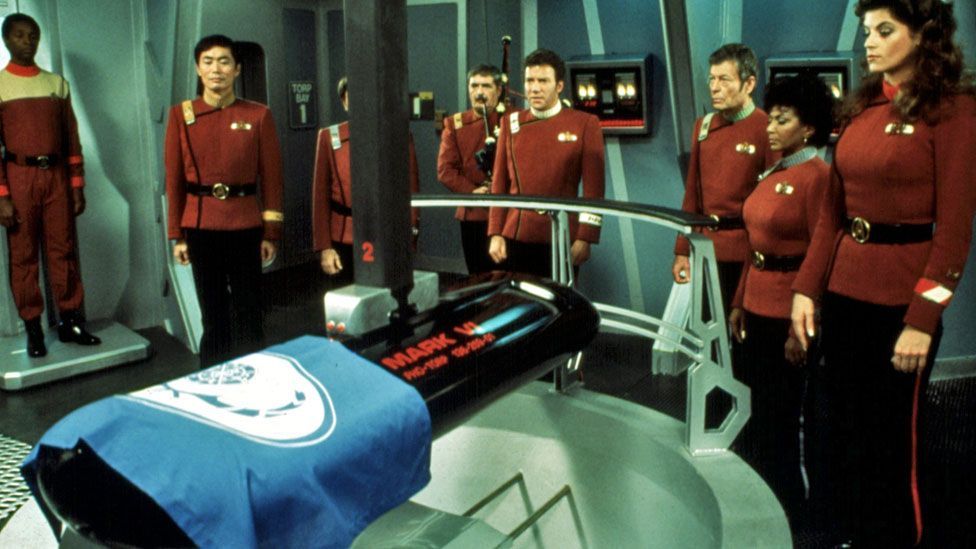
Scene from Spock’s funeral from the movie Star Trek: The Wrath of Kahn (1982).
Diamonds
Yes, you can turn cremated remains into a laboratory-grown diamond. Companies offering memorial diamonds extract carbon from cremated remains and use it as part of the diamond growing process. You can generally choose the stone’s size, color, and cut, and have it set into jewelry or kept as a loose stone.
Prices vary wildly. Some companies advertise diamonds starting around $1,000, while larger or colorless stones can run $10,000, $20,000, or even much more.
One important thing to understand is that you’re not getting a chunk of Grandpa’s original carbon magically squeezed into a diamond overnight. Science takes time! The process involves extracting and purifying carbon and growing a new diamond in a laboratory. The resulting stone is a real diamond, but the amount of material that ultimately comes from the deceased, and how that material is incorporated, can vary by company and process.
Glass Art & Jewelry
If diamonds are a little too “memorial heirloom with a mortgage payment,” cremated remains can also be incorporated into glass. Artists can encase a small amount of ashes in blown glass to create paperweights, sculptures, ornaments, pendants, and other pieces of art.
Prices vary depending on the artist and size of the piece, but this is generally a much more accessible option than a memorial diamond. And because you’re working with an artist, there’s often room for personalization.
Stones & Ceramics
Some companies incorporate cremated remains into artificial stones, ceramic objects, or other permanent memorial pieces. The idea here is pretty straightforward–take a small amount of ashes and incorporate it into something physical that can live in your home, garden, or another meaningful place.
Prices can range from relatively modest keepsakes to several hundred or more dollars, depending on the material and amount of customization.
Vinyl Records
For the person whose way of showing affection was making you listen to the same album for the 400th time, (we’re looking at you, Dad. Put that Steely Dan record down), yes, there are companies that will press a small amount of cremated remains into a vinyl record.
Some services let families choose music, record messages, or create a custom album to accompany the remains. One current provider lists bespoke memorial records in the roughly $1,000–$2,500 range.
Admittedly, this is a pretty literal way of keeping someone’s memory “on repeat.”
Fireworks
Baby, you’re a firework–literally. There are companies that incorporate a small portion of cremated remains into fireworks displays. Families can arrange a private memorial fireworks show, with the remains becoming part of the display. Depending on the provider and scale of the event, memorial fireworks can cost hundreds to several thousand dollars.
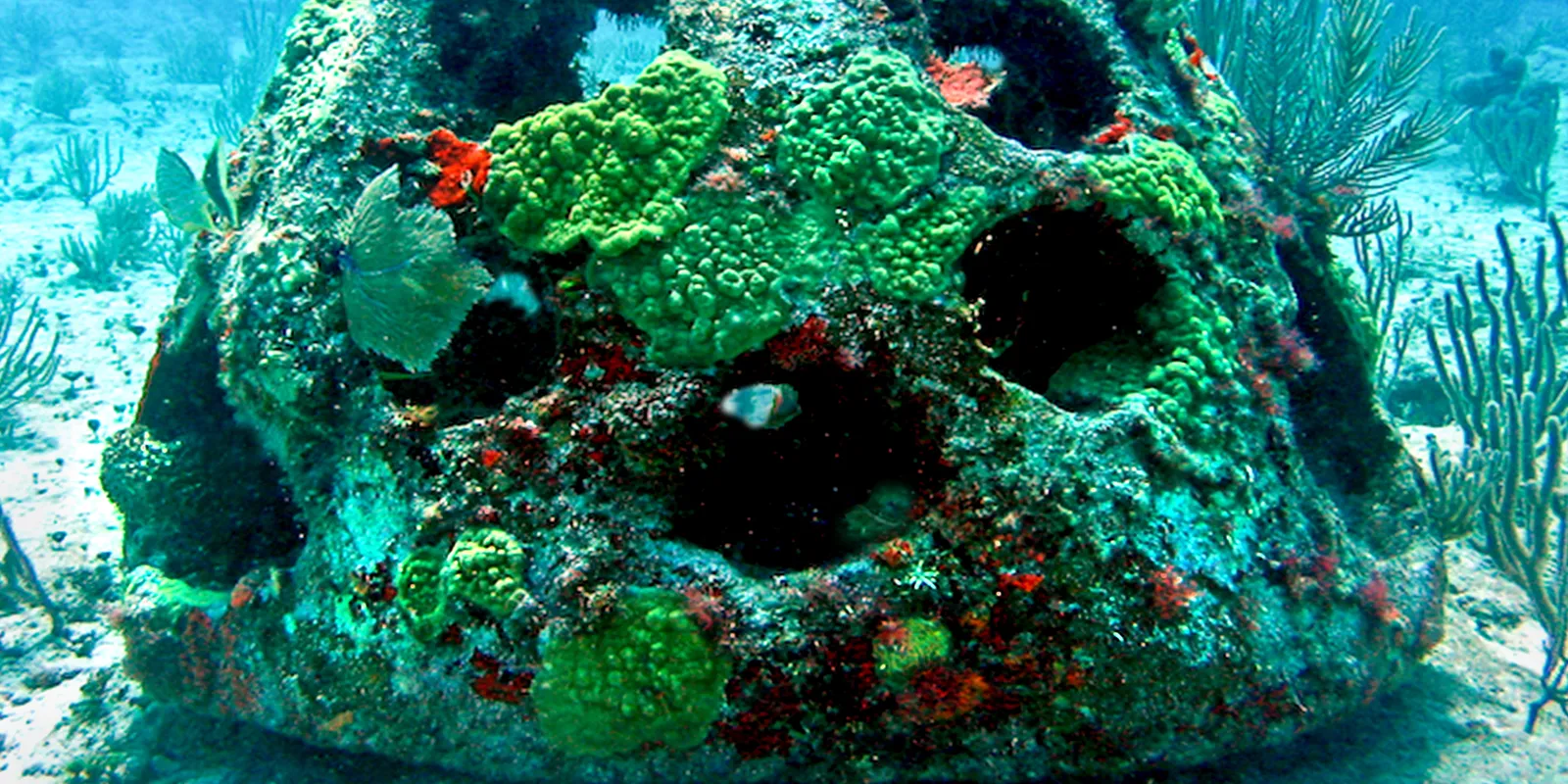
Reef Balls
Eco-friendly reef balls offer another option for your ashes.
Here’s how it works-cremated remains are mixed with pH-neutral concrete to form a large “ball” with holes. The ball is then lowered down to the seafloor to help restore areas that have been damaged, providing new habitats for marine life. Families are given GPS coordinates of the site where their person’s reef ball is located.
There are about 25 reef ball sites in the U.S. spanning from New Jersey to Texas that will accommodate the ashes of people and pets. Eternal Reefs is one of several providers, but they stand out as a nonprofit provider that uses associated fees to fund restoration efforts of ocean ecosystems around the world.
And More
So. Much. More. This is by no means an exhaustive list. Depending on where you live, you may find companies offering cremated-remains tattoos, bullets, incorporating ashes into ink, stuffed animals (don’t tell Build-A-Bear we sent you, ok?), and all manner of other memorial objects.
Some of these services are inexpensive and intimate, others are elaborate and expensive. NONE is inherently more meaningful than another. A $20 pendant containing a pinch of ashes can carry just as much emotional weight as a $10,000 diamond.
And before you send a company a portion of your loved one’s remains, remember, you don’t have to turn ashes into anything at all. There’s no deadline, and there are certainly no prizes in grief. Keep them in an urn, scatter them at sea, divide them among family members. You can do something with them now or ten years from now.
Emerging & Experimental Ideas
New technologies and startups are constantly promising to transform what happens after we die, but not every futuristic idea makes it past the prototype stage (or lives up to the marketing claims). This section explores what’s real, what’s possible, and what’s still mostly a cool idea on paper.
Tree Burial
“I want to be a tree when I die,” is quickly becoming the most popular choice for future corpses. Even with all the new products and providers that promise to do everything from transform your ashes into a tree, to start-ups selling burial space in forests nourished by bodies, the truth is becoming a tree when you die is more complicated than you think.
We suggest starting with our in-depth primer So You Want to Be a Tree When You Die?, in which we separate the facts from the myths about the most popular methods of choice like burial pods, or tree urns, and provide you with some attainable alternatives to achieve your future tree goals.
As with any product or service claiming to do something, it’s important to dig a little deeper. This 2023 article about a company that offers to plant tress over people’s bodies, states that “While many green burial cemeteries do offer to plant a tree directly atop your grave, not everyone in the industry agrees about the environmental credentials of the practice. Lee Webster, a founding board member of the Conservation Burial Alliance, says growing adolescent trees need ample space (ideally 50 square feet). They also require significant water, which can reduce the temperature within a grave below what’s needed to properly facilitate decomposition — between 105 and 155 degrees Fahrenheit, according to soil scientist and mortality composting expert Caitlin Price Youngquist. If all of these conditions can be balanced, the tree can thrive. If they’re not, both the decomposition and growth processes can suffer.”
The Mushroom Burial Suit and Mushroom Coffins
The Infinity Burial Suit or “Mushroom Burial Suit” was invented by Founding Order Member Jae Rhim Lee, who says: “The power of the suit is that it creates the need for meaningful planning and discussion around death.”
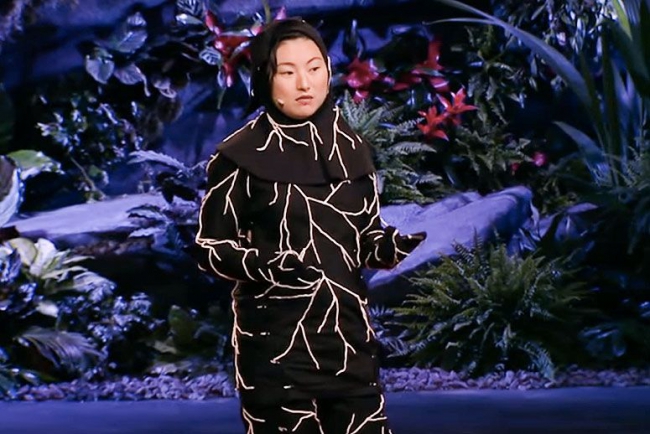
The Infinity Burial Suit is a handcrafted garment that is worn by the deceased.
The Infinity Burial Suit has a built-in biomix, made up of mushrooms and other microorganisms that together do three things; aid in decomposition, work to neutralize toxins found in the body, and transfer nutrients to plant life.
via Coeio
View her viral TED Talk on the subject, My Mushroom Burial Suit.
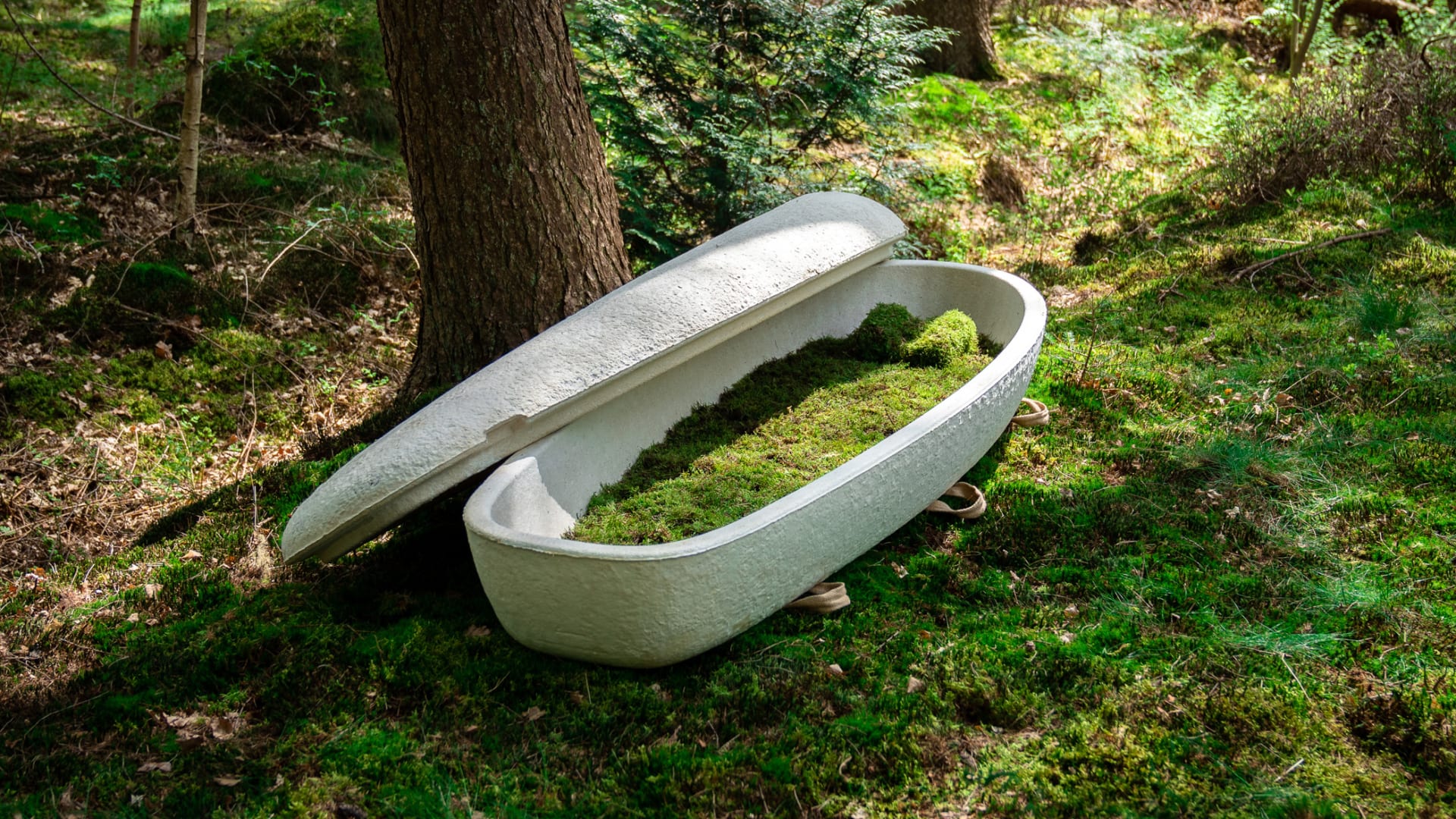
In the U.S., designer Shaina Garfield also created a coffin called “Leaves” which incorporates mushrooms. Here, the body is wrapped in a cotton shroud, and secured to a wooden plank with woven fibers that contain fungal spores.
While these products claim to aid and accelerate the process of decomposition, their effectiveness is questionable. Like anything we purchase, effective or not, these items can still be meaningful objects that hold value for the individual who chooses it; serving as a symbol of their care for the environment, and subverting the offerings of a traditional funeral.
Jae Rhim Lee’s original mission to foster important conversations about death, remembrance, and the environment, as well as help to ignite our imaginations regarding what is possible, have certainly been accomplished.
Another mushroom based product is now available in the U.S., the Loop Cocoon from the Netherlands. This “living coffin” is crafted in just 7 days from local mushrooms and hemp fibers, and biodegrades in just 45 days. The Loop Cocoon has been used in various European countries, with the first U.S.-Based burial taking place in 2025.
Separating Fact from Marketing
Life and death are full of companies eager to sell us products that promise meaning, sustainability, and immortality (or at least a very memorable urn). Here’s how to look past the buzzwords and ask better questions about what these options actually offer.
Promession
Promession, by designer Susanne Wiigh-Mäsak, is a conceptual machine that would rapidly decompose a corpse through a freeze drying process. At this point it is only at the concept/theory stage and is not available for use (hopefully this will change soon). In Kansas in 2019, efforts were made to legalize the option, however, progress was halted when Kansas Attorney General discovered that promession does not meet the definition of cremation under Kansas law and regulation.
In 2020 we dedicated an entire video to the concept of Promession and its progress so far.
Capsula Mundi
Capsula Mundi is an Italian company that has developed a biodegradable egg-shaped burial pod that replaces a casket.
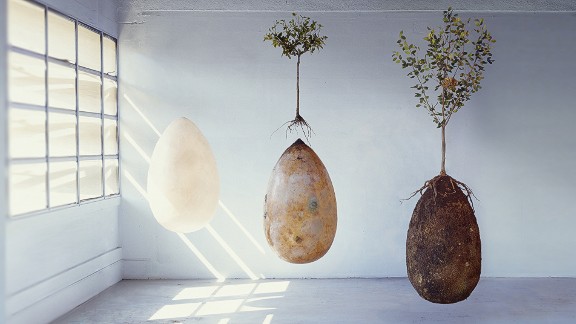
While not significantly different than natural burial, the designers created the pods in response to Italian laws that have make un-casketed burial difficult. This product is currently a concept and is not actually available.
Learn more about The Biodegradable Burial Pod That Turns Your Body into a Tree.
Biodegradable Tree Urns
One of the most popular corpse to tree products is the Bios Urn or similar urns, that promise to transform a person’s ashes into a tree, plant, flower, etc. But, can plants actually grow in ashes?
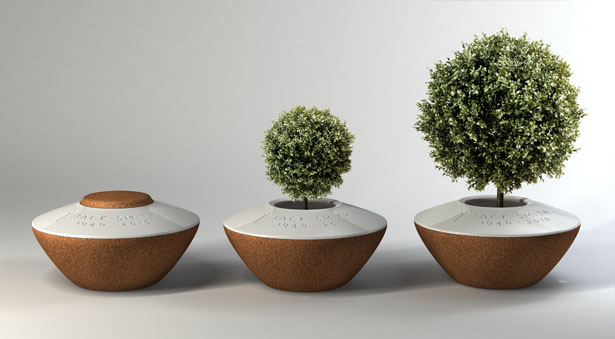
While it can be a lovely idea to scatter your loved one’s ashes at the base of a tree or in the garden, this is more of a symbolic gesture, since cremated remains are inorganic and contain no trace of human DNA. You aren’t really “becoming a tree” post-cremation.
In addition, ashes aren’t really compatible with the micronutrients and environment necessary to facilitate healthy soil or plant growth. Some companies claim to have specially prepared the soil to counteract the harmful properties of the ashes, while others include a protective container or filter, which keeps the ashes separate from the soil and plant growth. Please do your own research before purchasing this type of urn.
Memorial Forests
Memorial forests are locations that are protected from future development that are run by companies that will either mix your cremated remains into soil, and place them near or beneath a tree, or scatter them-for a price ($5,000-$16,000).
While interring cremated remains in a memorial forest can help to ensure that the land is protected, there’s the concern that the ashes themselves could potentially harm the surrounding environment.