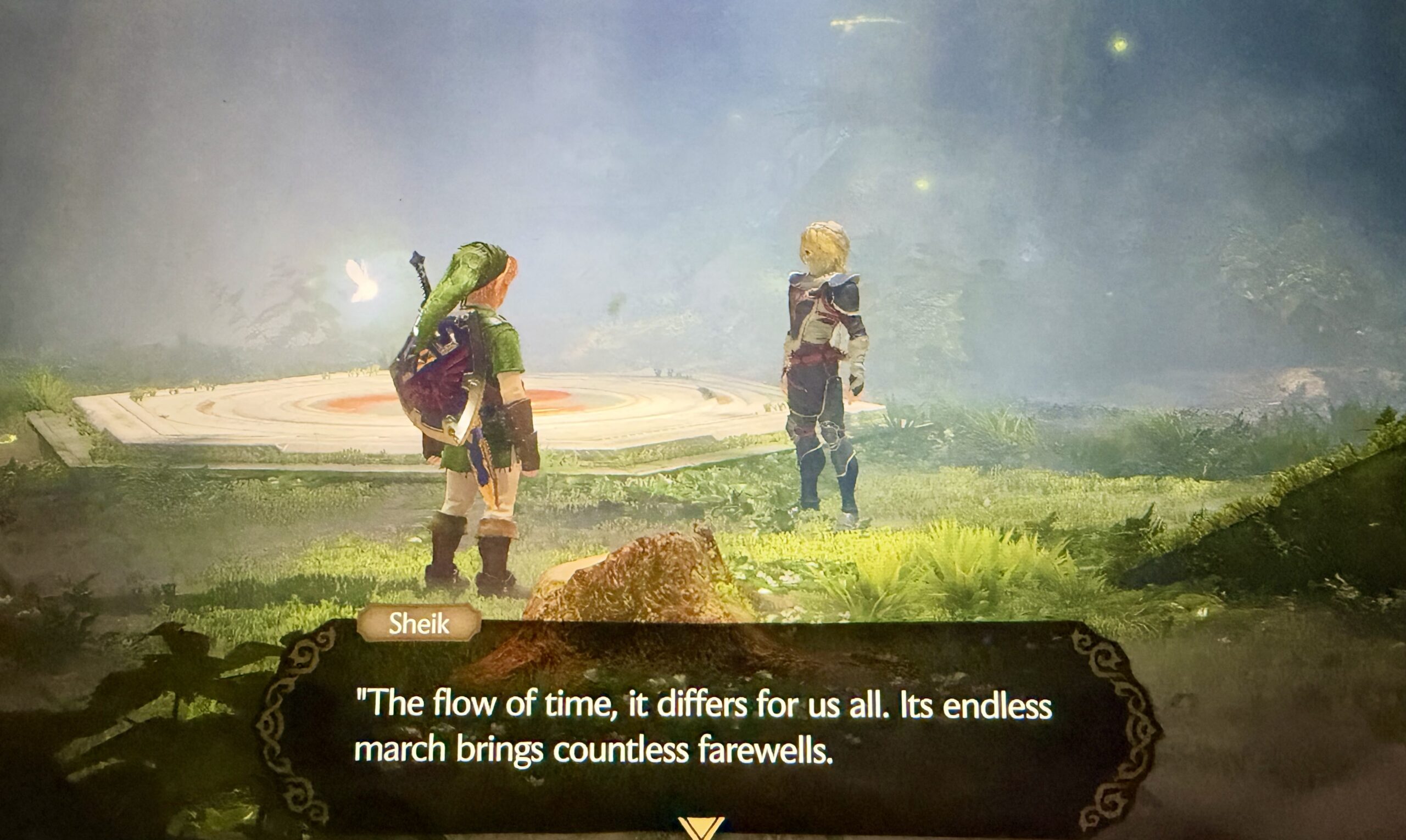
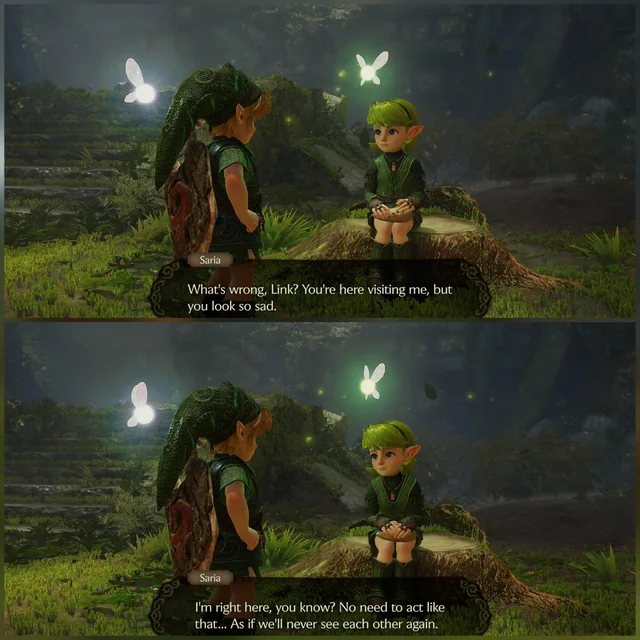
First released in 1998, Nintendo game The Legend of Zelda: Ocarina of Time introduced an entire generation of players to the world of Hyrule. Now, almost 28 years later, Nintendo has released a full remake version, resulting in a lot of players discovering that revisiting a beloved video game is an unexpectedly emotional experience full of not just nostalgia, but grief.
My TikTok algorithm first introduced me to this particular phenomenon through a clip of a Kokiri character sharing some final words from the Great Deku Tree: “Someday I too shall return to the soil, but do not despair, for I am always with you.” Overlaid on the footage was a simple caption: “Playing this game when you’re grieving just hits different.”
For many players it really does.
Since then, my social media feeds have been filled with tributes from players revisiting the game and remembering the people they first played it with. A player whose mother used to beat the Water Temple for the family, now playing through it alone after her death. Someone remembering being five years old while their dad defeated all the bosses for them, now 22 and having to face them on her own. Another player shares that his brother introduced him to gaming through Ocarina of Time, and that they buried his brother’s player’s guide with him after he died. He plans to become the Hero of Time once again, but this time in his brother’s name.
The thing that makes these tributes so moving is that time travel is woven into the very fabric of Ocarina of Time. You play as the character, Link, who moves between childhood and adulthood, returning to familiar places that have changed in his absence, and for so many players, picking up the game again years later feels like making a very similar journey. You’re back in a world you remember from your childhood, but you’re no longer the child who first explored or experienced it. The people who sat beside you, handed you the controller, or patiently beat the Forest Temple when you couldn’t are missing from this version of the world.
I also realized there’s another reason why the game feels so different when you’re grieving–because sometimes, the experience of playing it is a lot like grief itself.
I spent three days stuck in the Water Temple. THREE. WHOLE. DAYS. I couldn’t figure out where to go, what I was missing, or how to get past a particular point. That feeling of being completely stuck, of knowing there’s a way forward but not being able to see it feels so familiar to anyone who has experienced grief. Grief can make even the most ordinary things feel impossibly difficult, and can leave you disoriented, frustrated, exhausted, ready to quit, and wondering why something you once enjoyed and knew how to do now feels beyond your reach. You might find yourself wishing for the person who would normally help you through it, only to remember that they’re no longer there, and you have to figure out the next step on your own.
Progress isn’t always linear, and unlike the accepted myth tells us, there are no steps to grieving, (even if I definitely experienced denial, anger, and bargaining during my time back in the Water Temple). You can spend days feeling like you’re finding your footing, only to have a single moment when it feels like you’ve lost all the ground you’ve gained. You can feel stronger, more capable, even hopeful, and then suddenly find yourself back at the beginning, overwhelmed by something you thought you’d already worked through.
In Ocarina of Time, Link’s life is represented by a series of hearts, and as he takes damage, those hearts diminish, eventually emptying altogether. While it’s a simple visual system, I’m sure I’m not the only one who has noticed how much that image resonates. We don’t have an infinite supply of energy, strength, or resilience, and sometimes we take a hit and keep going when we should take a break, replenish, and try again later.
There’s something bittersweet about returning to a place that holds so many memories and discovering that you can still find the people you lost there. Not literally, of course, but in the rituals, the familiar music, the old strategies, and the things that they taught you. While the people we love don’t always make it to the next level, we can carry them with us by doing the things we once did together. For many of us, that’s one of the things that makes playing this version of Ocarina of Time so meaningful–the world we remember is still there, the same melodies are still playing, and, in some small way, so are they.